When trapping is used
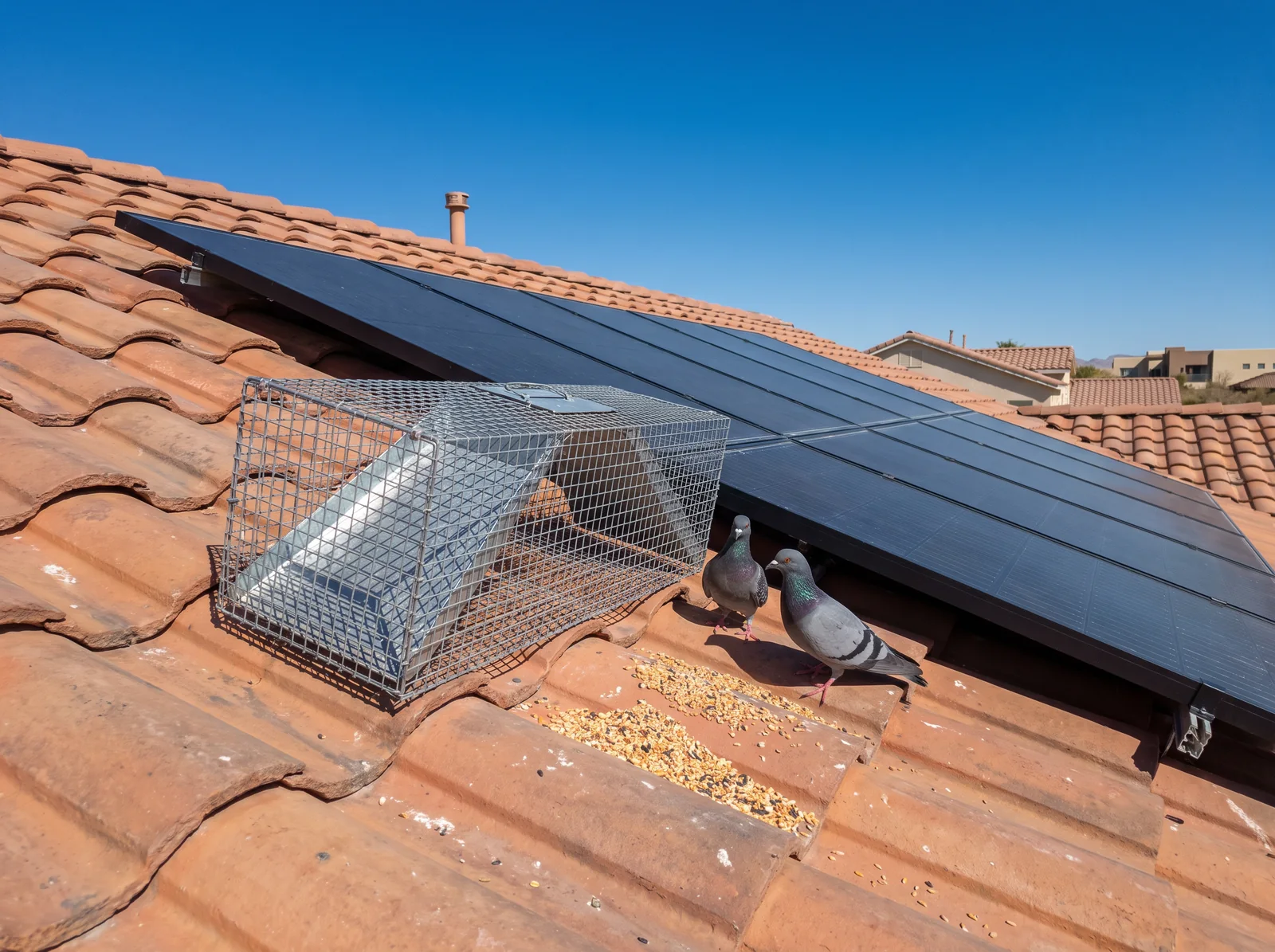
Pigeons are loyal to a roost. A flock that has bred on a roof for a season keeps returning to the same building even after the nesting gap is screened, moving to the ridge, the parapet, the neighbor's roof and back. Trapping is used when the number of resident birds is high enough that exclusion on its own would take months to move them on, or when there is no practical way to exclude every surface they use.
How a trapping program works
- Pre-baiting. Feed is put out on the roof or another spot the birds already use so the flock gets used to feeding there.
- Traps set. Live traps go in where the pre-baiting worked. Pigeons walk in to feed and cannot walk out.
- Regular checks. The traps are checked on a schedule, the birds are removed, and the traps are re-set. A program runs for days or weeks depending on the size of the flock.
- Exclusion at the same time. Screening, spikes or netting go on during the program so the roof is no longer usable when the program ends.
Ask the provider how often the traps are checked and what happens to the birds. Both are reasonable questions and the answer should be direct.
Exclusion after removal
Trapping without exclusion is temporary. New birds find the same shaded gap under the same solar array within the season. The point of the program is to bring the numbers down while the exclusion makes the property unattractive for good. Most jobs pair trapping with solar panel screening or spikes and netting.
Legal status in Nevada
Feral pigeons (rock pigeons) are an introduced species and are not protected under the federal Migratory Bird Treaty Act, which is the law that protects native birds and their nests. That is why pigeon nests can be removed and pigeons can be trapped, where a swallow nest or a hawk cannot be touched. The details and the local feeding rules are in the legal guide.
Questions about trapping
Is poison used?
The methods described here are live trapping and exclusion. Ask the provider directly what they use; the answer should be specific.
How long does a trapping program take?
It depends on the size of the flock and how quickly the birds take to the bait. The provider sets the schedule with you when you book.
Can I just scare them off?
Plastic owls, reflective tape and ultrasonic devices are widely sold. Pigeons get used to static deterrents quickly. Closing the roost is what moves a flock.
Sources
- University of Nevada, Reno Extension, Pigeons: Their Biology and Control (SP-02-11). https://extension.unr.edu/publication.aspx?PubID=3270
- U.S. Fish and Wildlife Service, list of bird species to which the Migratory Bird Treaty Act does not apply (Federal Register, April 16, 2020). https://www.govinfo.gov/content/pkg/FR-2020-04-16/html/2020-06782.htm
- Nevada Administrative Code 503.055, Unprotected birds. https://www.law.cornell.edu/regulations/nevada/NAC-503-055
- FOX5 Las Vegas, Mandate for humane pigeon trappings could be coming to Clark County (September 27, 2024). https://www.fox5vegas.com/2024/09/27/mandate-humane-pigeon-trappings-could-be-coming-clark-county/